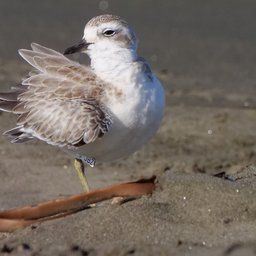
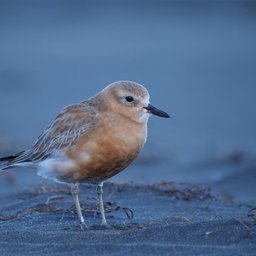
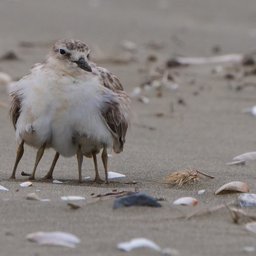
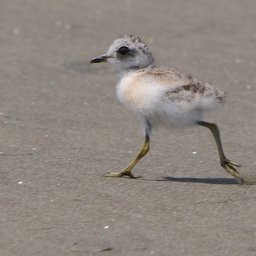
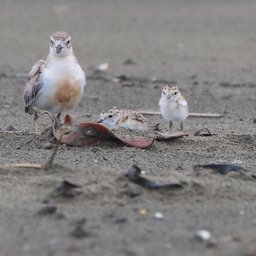
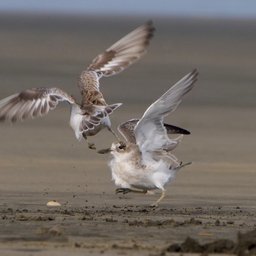
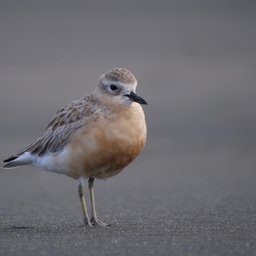
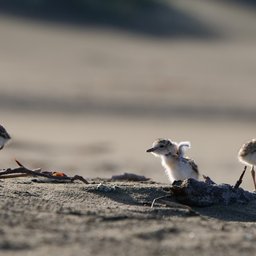
A small sand-coloured bird racing along the tide lines of Auckland’s west coast is becoming a quiet conservation success story — and locals are helping write the next chapter.
The Northern New Zealand dotterel (tūturiwhatu) is endemic to New Zealand and is one of Aotearoa’s most vulnerable shorebirds. The majority are found on east coast beaches in the top half of the North Island, but a small number breed on Auckland’s wild west coast.
A national strategy established in the 1980’s by John Dowding set up dotterel minding groups at many of the sites where the birds breed. Countless hours have been spent by volunteers trapping predators, fencing nests, monitoring chicks and educating beachgoers. Their mahi has resulted in an increase in total dotterel numbers around NZ from around 1000 in 1980 to over 2500 today. Without this effort Northern New Zealand Dotterel would be in decline.
Although bird numbers were small, dotterel-minding groups have also been established along the west coast of Auckland. For example, at Te Henga, just one breeding pair remained when dotterel minding began in 2018, and chicks had not been seen there for many years before that. Today, two breeding pairs are now resident on the beach, with chicks successfully fledging in six of the past eight seasons. A further pair at Wigmore Bay also regularly brings their chicks to the main beach once they can fly.
This season was particularly encouraging. On average, a breeding success rate of 0.5 chicks per pair each year is considered enough to maintain a stable population. At Te Henga, the average since monitoring began has been 1.0 chicks per pair — and during the 2025–26 season it reached 2.0.
A similar story is emerging on North Piha beach where two pairs of dotterels now raise offspring most summers with the help of community volunteers, who also help the four to five pairs at Karekare raise chicks to fledging each year.
However, local bird bander, Adrian Riegen, who runs the New Zealand Wader Study Group, noticed an intriguing feature of the data emerging from conservation groups on the west coast. Despite their breeding success, the dotterel population along the coast was not increasing by much.
That has sparked a new question — where are all the young birds going?
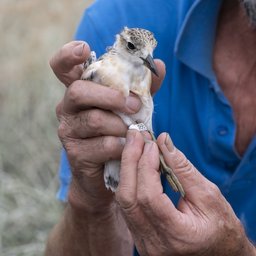
To track what was happening to new chicks in the population, Adrian set up a banding programme in 2018. Since then 66 dotterel chicks that hatched along the coast between Whatipu and Muriwai have been fitted with small engraved leg flags so they can be identified and tracked over time. Of these 66 banded chicks, 47 have been re-sighted; 34 of them at beaches other than their hatching sites.
What the sightings reveal is that some dotterels are remarkable travellers.
None of the chicks have settled in to breed at their ‘home beach’. While some move only a few kilometres along the coast, many travel much longer distances. One bird banded as a chick at Te Henga has settled in and is breeding on the Taranaki coast, more than 300 kilometres away. Most sightings have been on other west coast beaches, from Port Waikato up to the Kaipara harbour. One bird was seen on three west coast beaches on a single day. As well, five birds have been seen on the east coast of Auckland, with two of these likely breeding there.
The discoveries suggest Auckland’s west coast may be doing more than simply sustaining its own birds — it may be helping repopulate neighbouring coastlines, including some much further south.
Researchers say that makes public sightings of banded birds incredibly valuable. Every report helps build a clearer picture of how dotterels move, survive and establish in new breeding areas.
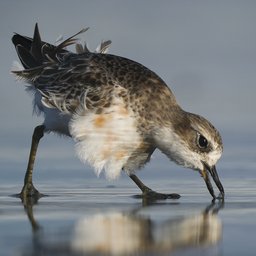
There are still challenges ahead. Scientists suspect food availability on some west coast beaches may limit how many birds the habitat can support, even when nests and chicks are well protected. Dotterels rely on tiny beach invertebrates such as sand hoppers, which thrive in seaweed-rich coastal systems.
But for now, the outlook is one of cautious optimism.
From a bird that was seen only sporadically to multiple successful breeding seasons, the west coast’s tiny travellers are showing that community conservation can work — not only keeping dotterels alive, but potentially helping them return to parts of the country where they had long disappeared.