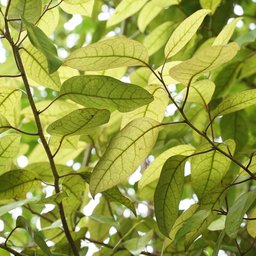
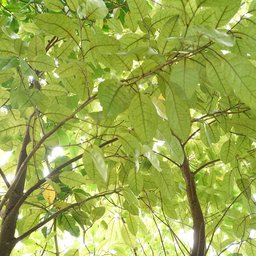
This month, Len turns our attention to mangeao, a distinctive canopy tree found in lowland forest in the northern half of the North Island.
Mangeao can reach up to 18 metres in height, with a trunk up to 80 cm in diameter, although trees are usually much smaller. It is abundant on limestone soils in the Waikato, while in the Waitākere Ranges it is less common and occurs here and there, usually on dry ridges.
Its most distinctive feature is its leaves. At 5–15 cm long, they have purple midribs and are semi-transparent, with obvious veins that are particularly noticeable when the leaves are viewed from beneath with light coming through from above.
The tree produces small, cup-shaped flowers, around 6 mm across, in clusters of four or five. These can be cream, white, pale yellow or greenish. Its fruit ripens to black and is around 15–20 mm in diameter.
Mangeao also has a strong connection with Māori use of native timber. Its wood is white, strong, very elastic and lightweight, and was used for canoe building.
So, next time you are walking through the Waitākere Ranges and come across a tree with those distinctive translucent, strongly veined leaves and purple midribs, take a closer look — you may have found a mangeao.
About Len: Len Gillman is a biogeographer and ecologist with expertise in biodiversity, conservation and New Zealand plant identification.