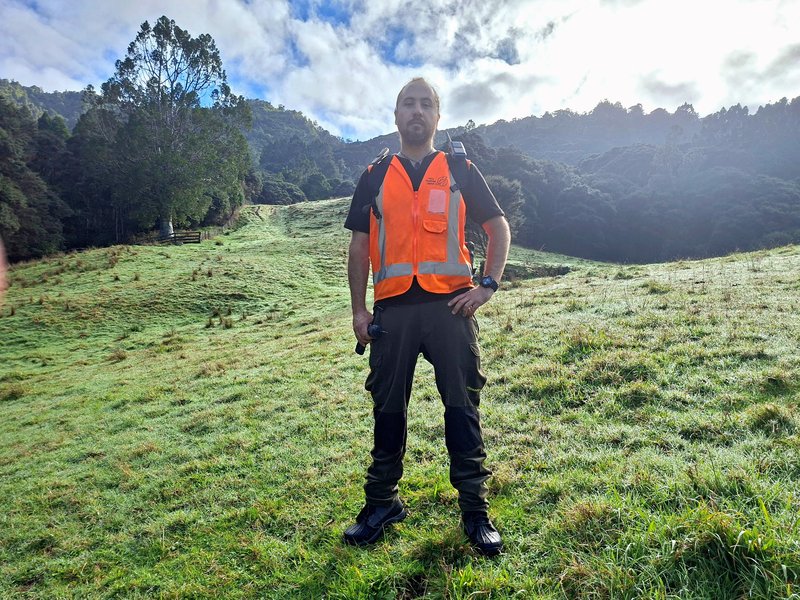
There is a sound Dave Minty is listening for. Not a rare call or a scientific recording. Just the ordinary chorus of a healthy New Zealand forest. More tūī. More kererū. More ruru calling through the night.
The Huia resident got a glimpse of that future in 2017 during a visit to Hauturu/Little Barrier Island. "I couldn't believe that level of biodiversity existed for real," he says. "The birds just did their thing without a care in the world. The kererū were foraging on the ground like chickens." For Minty, it was a glimpse of what the Waitākere Ranges once sounded like — and what they could sound like again. That vision has driven more than a decade of volunteer conservation work.
Ironically, it all started with rats.
When Minty and his family moved to Huia in 2015, predator control wasn't on his radar. "There were rats in the roof, rats in the rubbish and rats in the barbecue," he laughs. Determined to do something about it, he began learning about traps and pest control. One conversation led to another. He met like-minded locals. Trap lines expanded. Before long, a small neighbourhood effort had evolved into the Huia Trapping Group.
Today, that network includes 531 traps spread across almost 800 hectares of private land, regional parks and reserves. More than 90 people are registered with the project, and volunteers recorded around 7,000 predator catches. Yet Minty is quick to point out that conservation is a team effort. "Without all these individuals, it would just be me."
On weekends, he and fellow volunteers zig-zag across Huia checking trap lines, maintaining equipment and collecting data. A typical morning can involve servicing dozens of traps across farms, parks and bush blocks before most people have finished breakfast. The rewards, however, belong to everyone. Residents are noticing more native birds. Possums, once a common nighttime soundtrack, have become increasingly rare. Kererū are nesting more regularly, tomtits are appearing in greater numbers and ruru calls now replace the possum barks that once echoed through the valley. Even the forest itself appears healthier. "The trees have leaves and fruit. You don't see the browsing damage like you used to."
One of Minty's proudest achievements has come after dark. Working with community groups, Auckland Council and mana whenua, volunteers have helped monitor pekapeka, New Zealand's long-tailed bat. Acoustic recorders have detected bats throughout Huia, confirming they are far more widespread than many people realised. "People talked about seeing them years ago, but we were able to show they're still here and they're all around us." Seeing one up close remains what he calls a "unicorn moment".
Yet for Minty, conservation isn't really about trap numbers or statistics. It's about leaving something better behind. "I'd love my kids to experience what I saw on Hauturu," he says. Not on a remote sanctuary island. Right here in their own backyard.
And so each weekend he heads back into the bush, helping maintain a network that has grown far beyond anything he imagined when he first started dealing with rats at home. Still listening. Still chasing birdsong.