A major predator-control milestone has been reached in the Waitākere Ranges, with Ark in the Park recording an average residual tracking index (RTI) of just 4.3% - the first time in more than 13 years that rat numbers have fallen below the important 5% threshold.
For the Ark in the Park community, this is a moment worth celebrating.
Predator control has been underway at Ark in the Park since 2002, with years of sustained work helping protect native wildlife across the sanctuary.
The 5% RTI threshold is the standard recommended by the Department of Conservation's Kōkako Recovery Group. Keeping rat tracking rates below this level at the beginning of the breeding season is particularly important for the only kōkako population out West and other native wildlife, which is especially vulnerable while breeding.
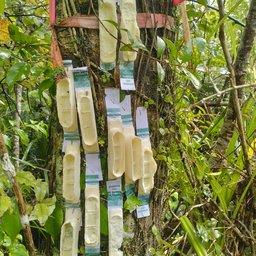
The latest rat toxin application, combined with the ongoing efforts of Ark's trapping community, reduced the average rat tracking index by 90%, bringing it down to 4.3%.
But behind that number is an extraordinary amount of mahi.
Six weeks. Thousands of hours. One big team effort.
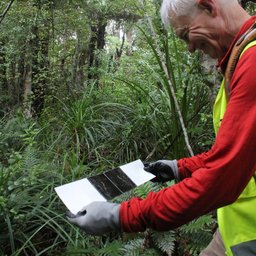
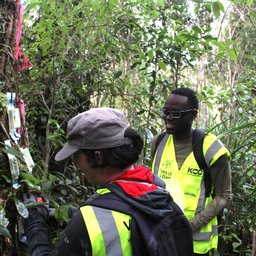
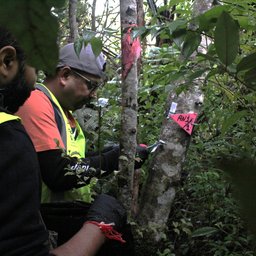
Getting the Ark below 5% wasn't a single operation or the work of one team. It took six weeks of very hard labour across steep and rugged terrain, involving volunteers, staff and contractors working to an exceptionally tight schedule.
- 95 volunteers contributed 1,074 hours
- Staff contributed 700 hours
- 12 contractors contributed 1,895 hours
That's 3,669 hours of work in just six weeks - alongside an investment of several hundred thousand dollars.
And while the scale of the work is impressive, the real achievement was the coordination behind it.
Volunteers, contractors and staff had to work closely together, communicate constantly and stick to a demanding programme. Once the operation was underway, there was very little room for slippage. Applying a new, highly efficient rat toxin put the teams on a tight schedule, with people needing to be in the right place, at the right time, to keep the operation moving.
That discipline, commitment and teamwork has paid off.
But the work isn't over
4.3% is a milestone - not the finish line.
As the breeding season approaches, the focus now shifts to keeping rat numbers low enough to give kōkako and other native wildlife the best possible chance.
That means upping the trapping effort, particularly in areas where kōkako are breeding. Ark in the Park is also preparing for another toxin application in November-December, providing another opportunity for people to get involved.
New volunteers are particularly welcome to join the trapping and baiting effort.
There are many ways to contribute - from checking traps and carrying bait to walking tracks, collecting data and helping with the practical work that keeps predator control moving week after week and year after year.
“Keep the Ark afloat”
Dr Daria Erastova, Ark in the Park Project Manager, sums up both the achievement and the challenge ahead:
“We’ve got the Ark through a pretty big storm and, for the first time in more than a decade, we’ve got rats below the recommended threshold across the whole sanctuary. Now we need to keep the Ark afloat through the breeding season and that takes all of us and more!”
Ark in the Park is a collaboration between Forest & Bird, Auckland Council and mana whenua Te Kawerau ā Maki, working across Cascade Kauri Park and the Waitākere Ranges Regional Park. It is also a member group of the Pest Free Waitākere Ranges Alliance.
The significance of reaching 4.3% is about more than a number. It represents what can be achieved when volunteers, staff, contractors, partners and funders work together over many years.
Now the challenge is to hold that ground through the breeding season.
Want to help?
Ark in the Park is looking for people to get involved in trapping and baiting, including the upcoming November-December toxin application.
To find out how you can help Ark in the Park - or get involved with other conservation work across the Waitākere Ranges - visit: